Our story
It started with a question nobody could answer
Turn over almost anything in a shop today and read the back of it. Most of that list are words you don't recognise, and there is no one to ask what they are doing in your food.
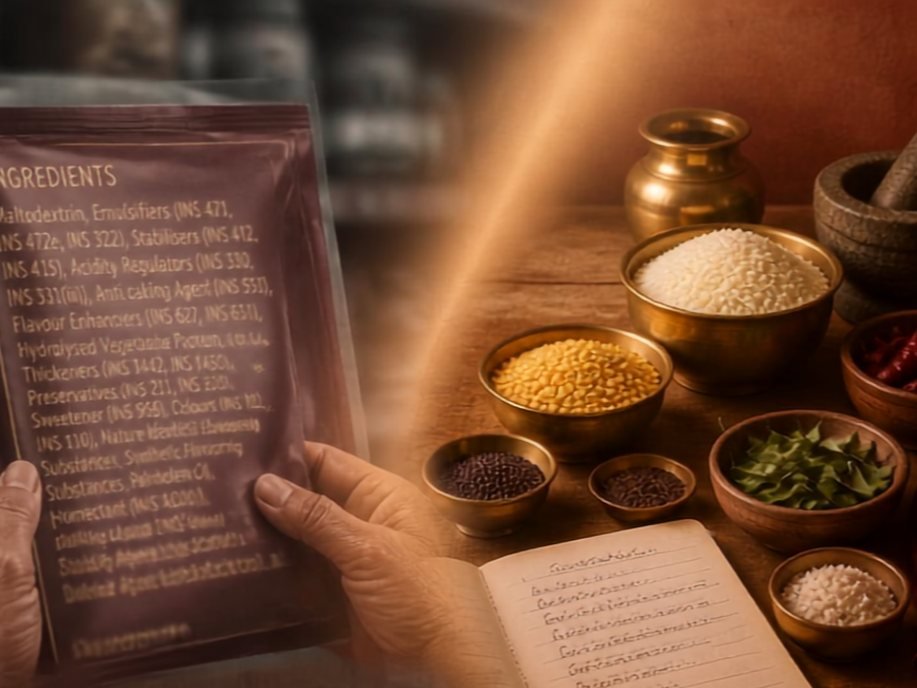
That is the actual problem. Not that food is scarce, or expensive, or slow to arrive. It arrives in ten minutes. It's that somewhere along the way we lost the ability to know who made it, what went into it, and whether anyone cooking it cared whether we ate well.
A generation ago the question wasn't worth asking, because you already knew the answer. Your mother made it. Your grandmother made it. The murukulu came out of a steel dabba somebody filled last Tuesday. The pickle came out of a jar that had been sunned on the terrace. There were no ingredient lists because there was nothing to list.
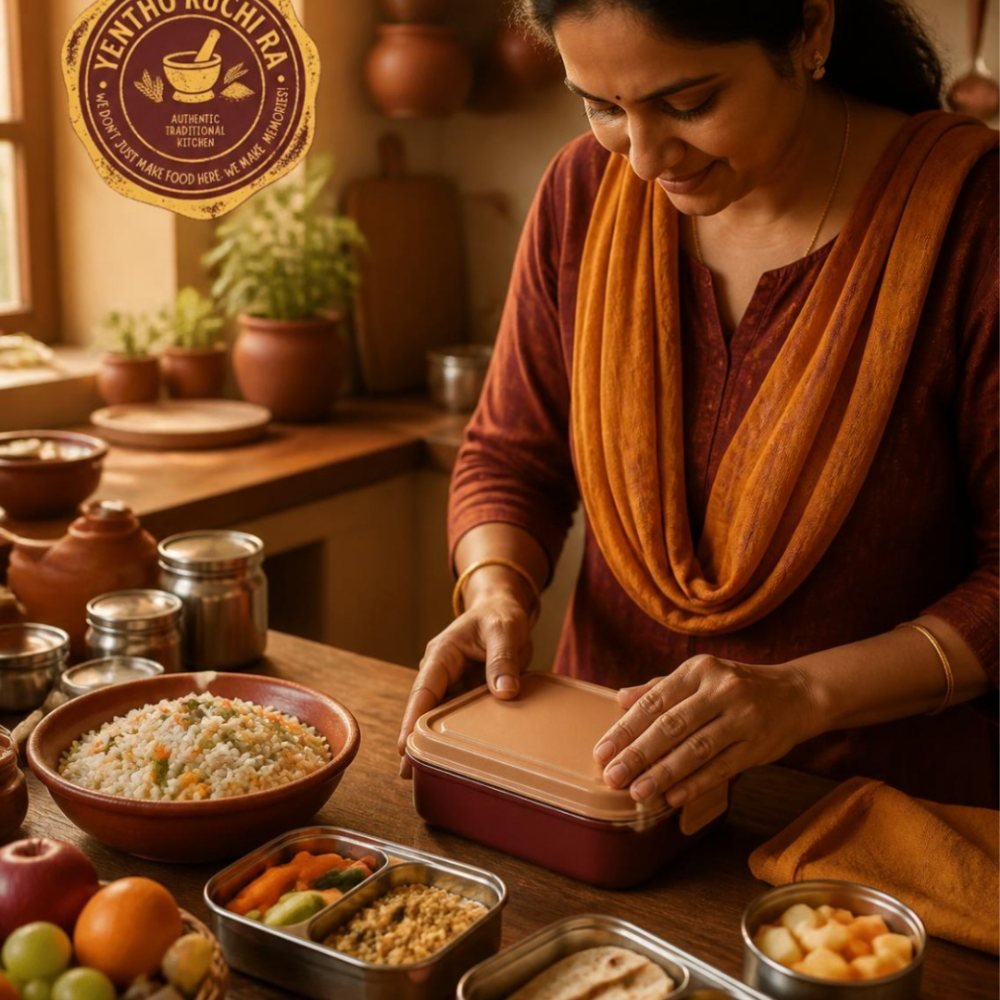
Yentho Ruchi Ra started in a kitchen in Chittoor, cooking for a family the way families have always been cooked for. People who ate there kept asking whether they could buy some to take home. Eventually the answer was yes.
Nothing leaves this kitchen that she wouldn't put on her own children's plate. That isn't marketing. It's just how the decision gets made.
Who is actually cooking
A mother, not a brand
The company is only the part that makes it possible to reach you.
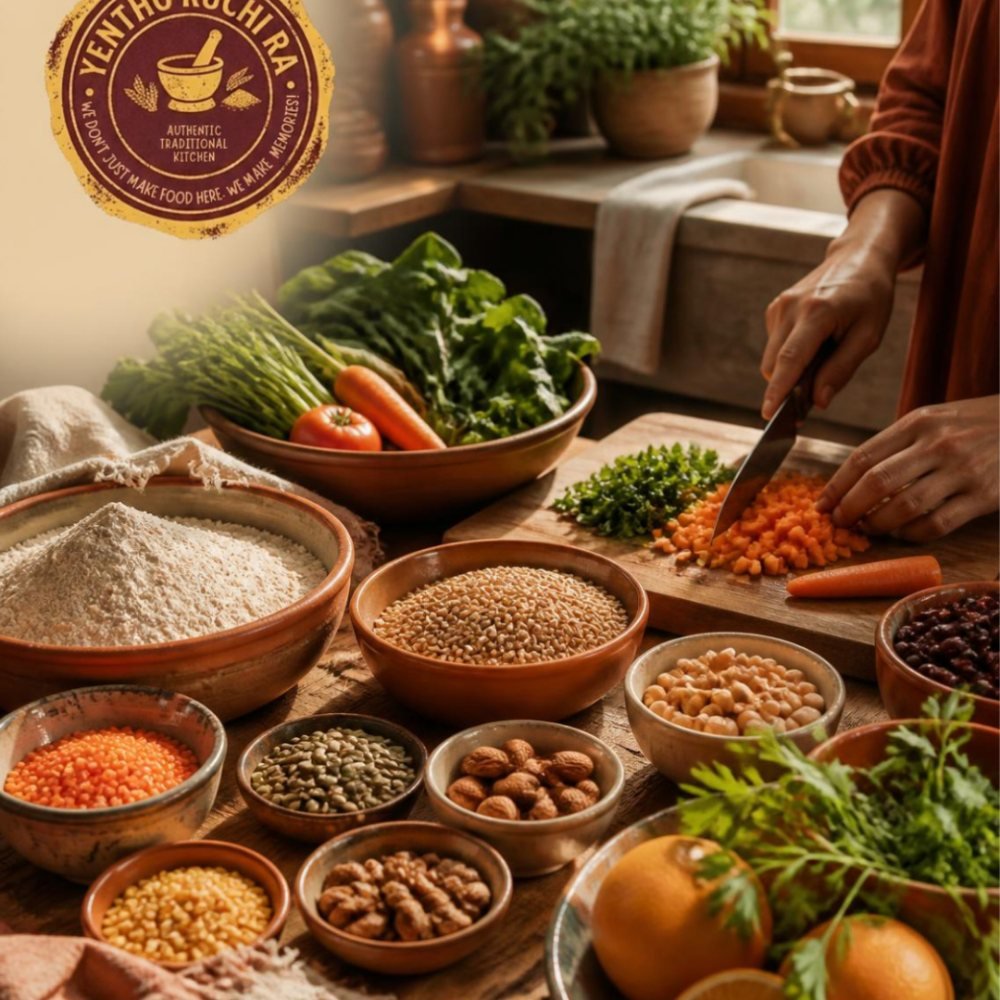
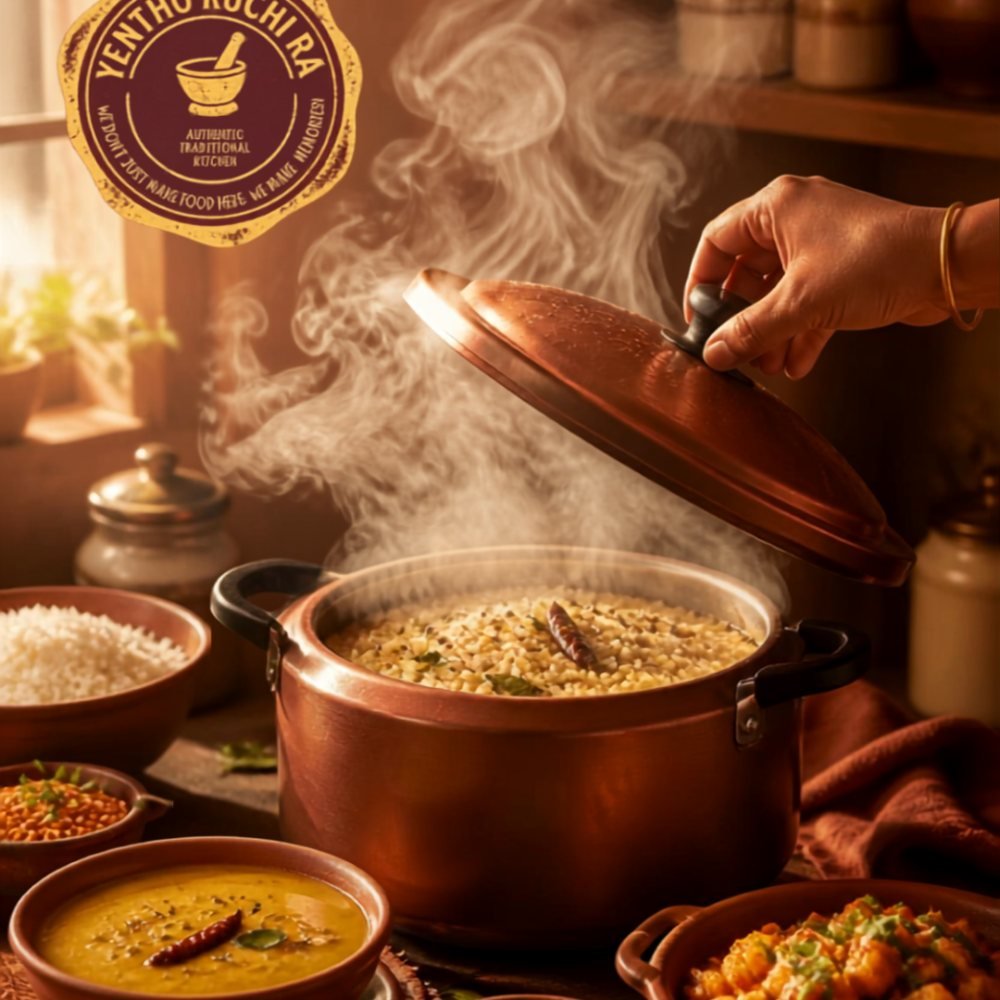
Every dish comes from a real person standing at a real stove, using the method she was taught, in quantities small enough that she is still tasting as she goes.
Which is why some things run out, some things are seasonal, and some things take a week because they can't honestly be made faster. We could fix all of that with machinery and a longer shelf life, and then it would be somebody else's food.
What we will not do
The rules that decide everything
Every question about a new product, a new city or a cheaper supplier goes through these. If a decision fails one of them, it doesn't happen.
No artificial colours or flavours
Not one. If something needs a flavour enhancer to taste good, it wasn't made properly in the first place.
No preservatives
Salt, cold-pressed oil, chilli and time. That's what has kept avakaya edible for a year in Telugu houses for generations.
Small batches only
We'd rather tell you something is finished this week than make more of it than can be made carefully.
No fresh food travelling far
Cooked meals stay in Chittoor. A lunch made at eleven shouldn't be eaten at four, however good the packaging is.
Hygiene we'd show you
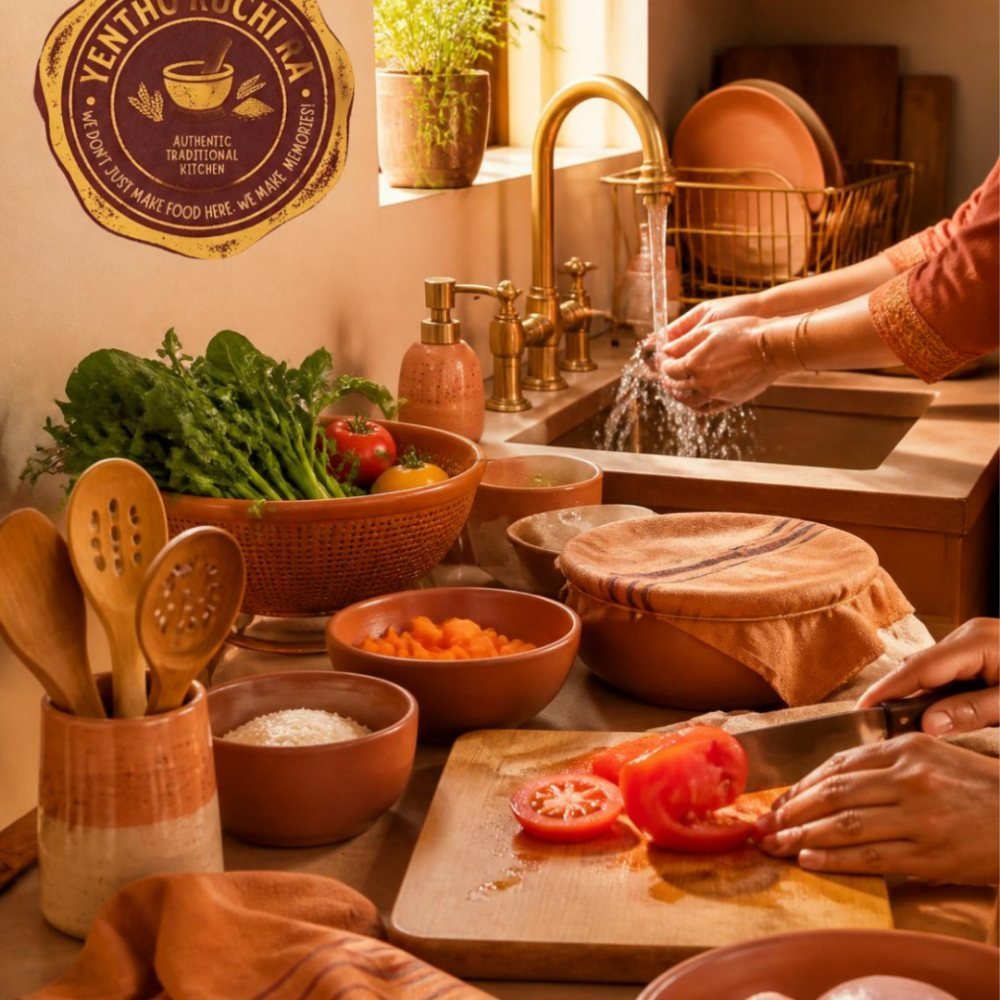
Run to a standard we'd be comfortable with you walking into unannounced. Ask, and you're welcome to.
Honest about what we're not
We're not the cheapest and we're not the fastest. Real ingredients and real labour cost what they cost.
Where this goes
One kitchen now. A network of them, eventually.
There are women in every town who cook better than any restaurant nearby and have never been paid a rupee for it. The long-term plan is a verified network of home kitchens across India, trained to one standard, cooking their own regional food.
That's the version of scale we're interested in. Not a factory printing "homestyle" on a wrapper, but more actual homes, more actual cooks, each answerable for what leaves her kitchen.
Until then, it's this one kitchen in Chittoor, doing it properly.
Randi, tinandi
Taste it and decide for yourself
Start with one jar of avakaya or a week of lunches. That's a fairer test than anything written on a page.